How Better Hospital Wayfinding Can Reduce Direction-Related Questions
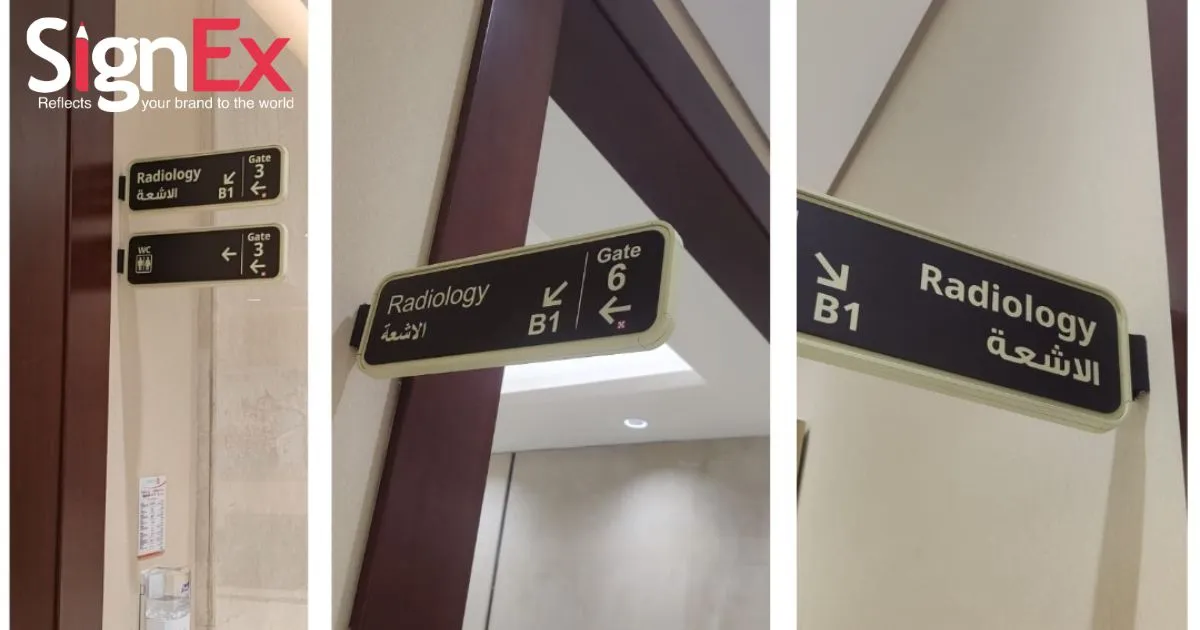
Hospitals should direct people before they have to seek directions themselves. Wayfinding signage plays a very important role in ensuring that it is easy to find one’s way around hallways, avoiding any confusion, as well as locating the required department. Through the use of services from an exhibition signage supplier in Saudi Arabia, hospitals can achieve this objective.
The entire hospital building, including the reception, waiting, elevators, treatment, and emergency zones, needs signage to guide visitors. If the signage is located in areas where visitors make decisions about the route to take and contains clear words and symbols, then navigating hospitals will be easier for visitors.
Various Ways Better Hospital Wayfinding Can Reduce Direction-Related Questions
Hospital wayfinding can change the maze-like hallways into an easy-to-navigate place. Good signage will identify departments and facilities without needing directions.
Creates a clear navigation system
There could be different floors, sections, departments, and specialized units within a hospital setting, and hence navigating through such places becomes difficult for first-timers. With a proper wayfinding system, one is able to find a pathway from the point of entry to the desired location. Directional signage at critical junctions helps people get their bearings straight.
Choose an experienced signage supplier
A hospital’s wayfinding success relies on planning, positioning, production, installation, and maintenance, not just sign design. Collaboration with a recognized signage supplier in Saudi Arabia will facilitate the development of an appropriate signage strategy that aligns with the architectural design of the building, volume of traffic, and other such requirements.
Uses simple and easy-to-read information
The signs at a hospital have to communicate quickly and clearly, particularly since patients tend to be anxious and might not be familiar with the layout of the hospital. Clear language, good typography, contrast, and arrows can aid in providing directional information.
Guides visitors from the entrance
Wayfinding is a significant process that must begin even before visitors enter the hospital. Well-designed exterior signs help visitors find key areas like the main entrance, emergency entrance, parking, and outpatient services. Clear signs help visitors choose the right entrances without asking security or reception.
Makes corridors easier to navigate
It will be hard for people moving around long corridors and at several junctions to know which way to go without appropriate directional cues. The signs should be placed where people have to make decisions, such as at crossings, elevators, stairways, and corridor entrances.
Improves accessibility for different users
The hospital way-finding system must be developed keeping in mind individuals who have varied capabilities. Some of these include the use of tactile signage, Braille, pictograms, contrast, and sign location. International symbols and tactile or Braille signage can be considered as per accessibility guidelines.
Combines static and digital wayfinding
The modern hospital can incorporate traditional signage along with the use of digital directory systems. Digital wayfinding systems can be highly effective in larger healthcare institutions that may experience changes in departments, services, or routes. Contemporary signage firms are providing both types of wayfinding systems.
Conclusion
Good wayfinding can make hospitals simpler, lessen the number of questions, increase employee efficiency, and bring peace to patients and visitors. There should be a unified approach to bilingual signage, clear labeling of departments, and use of navigation systems. By using the principles of movement when placing the signs, hospitals ensure quicker and easier navigation.

 PREV
PREV
Related Posts
How Thoughtful Hotel Signage Can Transform Guest Experiences

The Most Common Signage Mistakes: What Every Business Should Know
Corporate Office Wayfinding: How to Guide Visitors Without Confusion

How to Attract More Visitors to Your Booth with Digital Screens